
Senior Dog Grooming: What Changes as Your Dog Ages
Grooming needs don't stay the same throughout a dog's life. As dogs get older, their skin, coat, joints, and tolerance for handling all shift, and a grooming routine that worked fine for years may suddenly need adjusting. Here's what typically changes, and how to keep grooming comfortable for a senior dog.
How Grooming Needs Change With Age
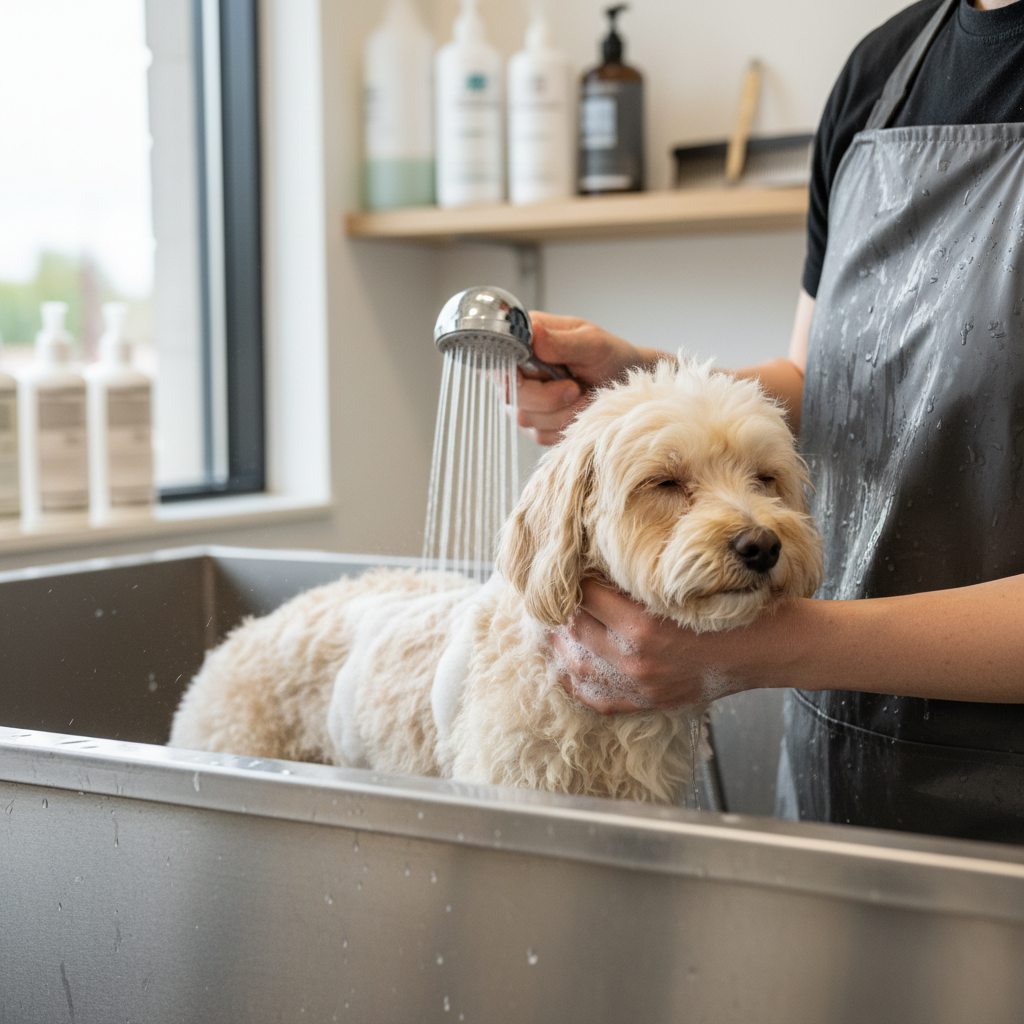
A few things tend to shift as dogs move into their senior years:
- Thinner, more sensitive skin. Older dogs often develop drier, more fragile skin, which means gentler products and less vigorous brushing.
- Slower-growing or changing coat texture. Some senior dogs shed less, while others develop patchy or duller coats that need different care than they did as adults.
- Reduced flexibility for self-grooming. Arthritis and stiffness make it harder for a dog to reach certain areas, which often means more matting in spots they used to manage on their own.
- Faster-growing or more brittle nails. Senior dogs are often less active, which can mean nails don't wear down naturally the way they did with a younger, more active dog.
- Lower tolerance for long sessions. A groom that used to take an hour without issue might now need breaks or a shorter overall session.
None of this means grooming becomes harder exactly, it just means the approach needs to adjust.
Why Arthritis and Joint Pain Change the Grooming Process
Arthritis is one of the biggest factors in how a senior dog experiences grooming. Standing for an extended period, being lifted onto a table, or holding a paw still for a nail trim can all be uncomfortable for a dog with joint pain, even if they were perfectly tolerant of the same process years earlier.
A groomer working with an arthritic senior dog typically needs to:
- Allow more time for positioning changes and rest breaks
- Avoid holding a limb in one position longer than necessary
- Use supportive, non-slip surfaces to reduce strain on joints
- Watch for signs of discomfort rather than assuming a dog is simply being difficult
A dog that suddenly seems less cooperative during grooming isn't necessarily behaving worse. In many cases, it's a sign that something physically hurts.
Skin and Coat Changes to Watch For
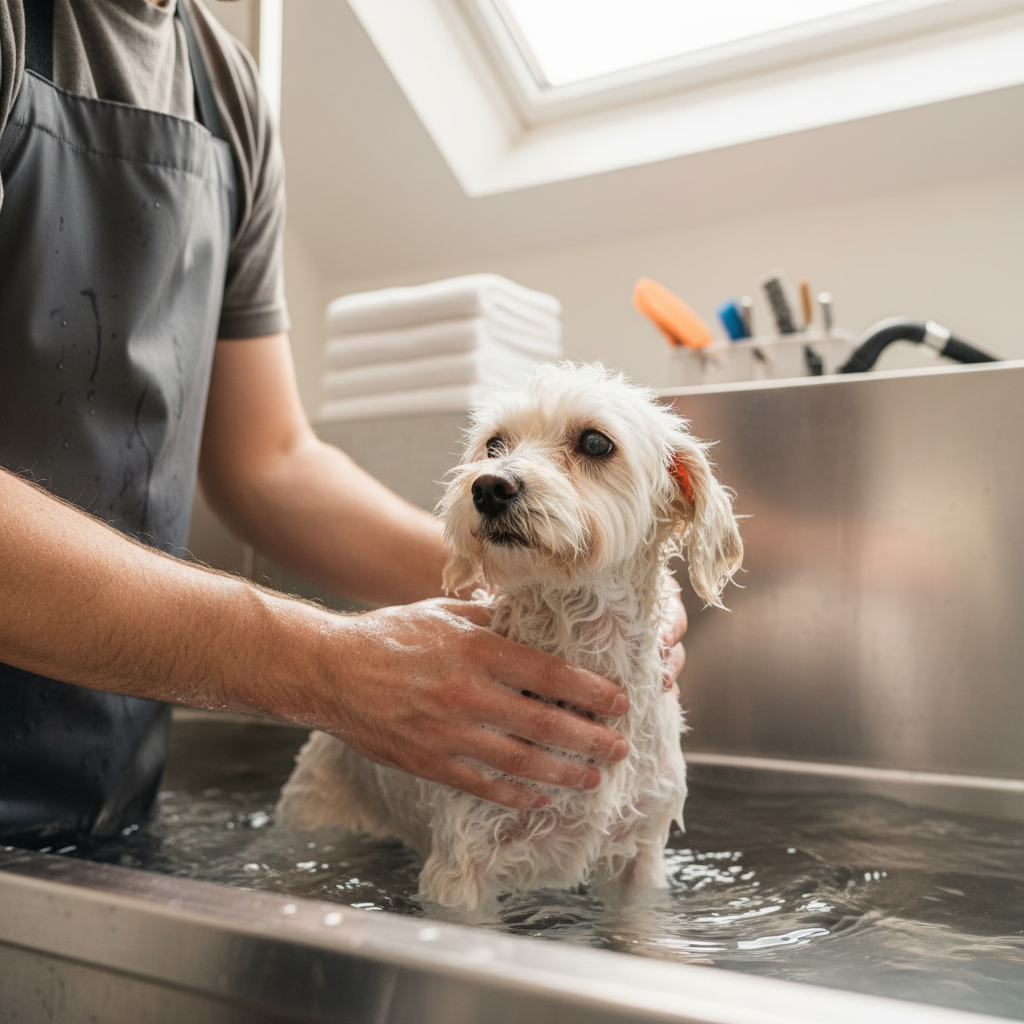
Senior dogs are more prone to certain skin and coat issues that are worth catching early:
- Dry, flaky skin, which often needs a gentler shampoo and less frequent bathing than a younger dog
- Lumps or bumps, which a groomer may notice during brushing before an owner does, since they're handling the full coat closely
- Thinning fur, particularly around the ears, hindquarters, and belly
- Slower healing from minor nicks or scrapes, which means extra care during nail trims and trimming around sensitive areas
A groomer familiar with senior dogs knows to check for these things during a session and flag anything that seems worth mentioning to a vet.
How Often Should Senior Dogs Be Groomed?
Grooming frequency for senior dogs depends more on individual health than a fixed schedule. That said, a few general points hold true:
- Nail trims are often needed more frequently, since reduced activity means nails wear down less naturally
- Coat brushing at home should happen more often to catch mats early, since a senior dog may not be self-grooming as effectively
- Full grooming appointments can often stay on a similar schedule to when the dog was younger, but sessions may need to be shorter or split into stages
- Dogs with mobility issues may benefit from slightly more frequent shorter appointments rather than one longer session
The right frequency really comes down to what a specific dog can comfortably tolerate
Why Mobile Grooming Often Works Better for Senior Dogs
Mobile grooming tends to be an easier fit for older dogs for a few specific reasons:
- No car ride, which can be physically uncomfortable for a dog with joint pain or anxiety about travel
- No waiting in a kennel, which senior dogs with reduced tolerance for stress often find harder to handle than they used to
- One-on-one attention, meaning a groomer can move at the dog's pace rather than working around a shop schedule
- A quieter, calmer environment overall, since there's no exposure to other dogs or unfamiliar noise
For a senior dog that's become harder to transport or more anxious about unfamiliar environments, mobile grooming often makes the entire process noticeably easier.
Signs It's Time to Adjust Your Senior Dog's Grooming Routine
A few signs suggest it's worth changing how grooming is handled:
- Your dog seems noticeably more tired or stiff after a session than in the past
- Mats are showing up in new areas your dog previously kept clean on their own
- Nail trims seem to cause more discomfort than they used to
- Your dog resists positions or handling that never bothered them before
- Sessions that used to be straightforward now seem to need more breaks
Any of these are worth mentioning to your groomer so the approach can be adjusted going forward.
Frequently Asked Questions
Do senior dogs need to be groomed differently than younger dogs?
Yes. Senior dogs often have more sensitive skin, reduced flexibility, and lower tolerance for long sessions, which usually means a gentler, slower approach to grooming.
How often should a senior dog get nail trims?
Often more frequently than a younger dog, since reduced activity means nails wear down less naturally on their own.
Is mobile grooming better for senior dogs?
For many senior dogs, yes. It removes the car ride and waiting kennel, which can be physically and mentally harder on an older dog than it used to be.
My senior dog seems less cooperative during grooming lately. What does that mean?
It's often a sign of discomfort, such as arthritis or joint pain, rather than a behavioral change. Mentioning this to your groomer helps them adjust their approach.
Should I groom my senior dog less often because sessions are harder for them?
Not necessarily. Shorter, more frequent sessions or a slower pace during longer appointments is often a better solution than skipping grooming altogether, since that can lead to matting or overgrown nails.
Ready to Book a Gentle Groom for Your Senior Dog?
Master Grooming LLC brings calm, patient mobile grooming to senior dogs across Boca Raton and West Palm Beach, with sessions adjusted to your dog's comfort and pace.
📞 Call (786) 201-2632